 Whatsapp an Expert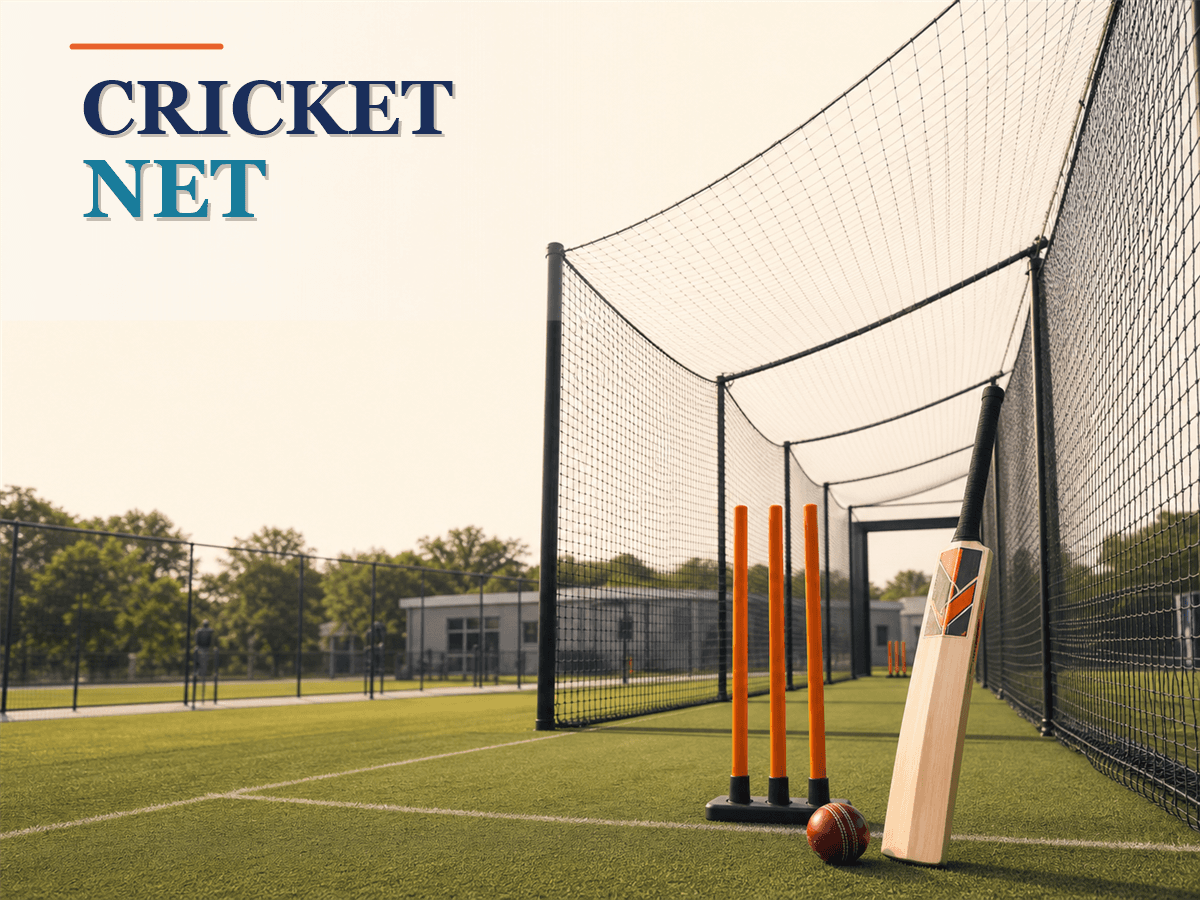
Mesh Size, UV Protected & Safety: Cricket Net Features Explained
In India, cricket is not only a sport, but a passion enjoyed by people of all ages. As cricket practice grows in schools, colleges, academies, societies and even backyards, the need for good-quality cricket nets has also increased. However, choosing the right cricket net is not always simple because several features affect its performance, safety and life.
The most important features include mesh size, UV protection, material quality, twine thickness and overall safety. Understanding these points will help you make the right choice whether you are buying a cricket net for professional practice, school training or home use.
Why Mesh Size Matters in Cricket Nets
The mesh size of a cricket net decides how effectively it can stop the ball. Mesh means the small square-shaped openings in the netting material. Different cricket nets come with different mesh sizes, and each option has its own use.
For cricket practice, smaller mesh sizes are better at stopping fast-moving cricket balls. This is useful when multiple players are batting or bowling in the same area because the ball is less likely to escape through the net.
Larger mesh sizes can be lightweight and more economical, but they may not offer the same level of safety and ball control as smaller mesh sizes. For high-intensity practice, academy sessions or strong batting practice, a tighter mesh is usually a better option.
At Netskart, cricket nets are available in commonly used mesh sizes such as 50 mm and 45 mm. The 50 mm hole size is generally used, while 45 mm is suitable when a slightly tighter structure is required.
The Role of UV Protection in Net Durability
Indian weather can be harsh, with strong sunlight, heavy rain, dust and humidity in many regions. Cricket nets installed outdoors are regularly exposed to these conditions. This is why the net material should be suitable for outdoor use.
UV protection is important because it helps the net resist damage caused by sunlight. In good-quality cricket nets, UV resistance is built into the material during manufacturing. This helps the fibres stay stronger and prevents the net from becoming weak, faded or brittle too quickly.
This feature is especially useful for schools, sports academies, residential societies and outdoor practice areas where the net stays installed for long periods.
Safety: The Most Important Feature
Safety is one of the most important reasons to use a cricket net. A good net helps prevent balls from hitting nearby people, vehicles, windows, walls or neighbouring property. Quality cricket nets are designed to absorb the impact of hard-hit balls, especially during fast bowling or powerful batting shots.
An effective net should be able to stop a cricket ball without tearing, sagging or creating gaps. Safety also depends on proper installation. Loose ends, weak fixing points or open corners can allow the ball to escape and may lead to accidents.
For beginners and children, safety becomes even more important. A secure cricket net setup gives players a safer practice area where they can focus on improving their batting and bowling.
Installation and Support Structure
Another important point is installation. A cricket net performs well only when the support structure is strong and properly fixed. Metal poles, GI pipes, stainless steel supports, hooks, ropes or frames may be used depending on the type of setup.
The net should be pulled tightly across the frame so that it does not sag. If the net is loose, it may not stop the ball properly and can also look untidy.
For regular practice pitches, permanent net setups with strong ground fixing are usually the best choice. These are common in cricket academies, schools and sports grounds. For personal or occasional use, semi-permanent or temporary frames can also work, but they should still be strong enough to hold the net firmly.
Netskart – A Trusted Platform for Cricket Nets in India
Netskart.com is a trusted online platform for buying durable and good-quality cricket nets in India. Netskart offers cricket nets for schools, academies, societies, farmhouses, sports grounds and home practice setups.
Netskart deals in Garware and ProNet cricket nets, which are known for quality and durability. Cricket net options are available in HDPE material with different thicknesses such as 1.5 mm, 2 mm, 2.5 mm and 3 mm. The 1.5 mm option is twisted, 2 mm and 2.5 mm are braided, and 3 mm is knotless.
You can explore cricket net options here:
Garware Cricket Net Braided: https://netskart.com/shop/sports-net/garware-cricket-net-braided
Cricket Nets Twisted 2.5 mm: https://netskart.com/shop/sports-net/cricket-nets-twisted-2-5-mm
Garware Cricket Net Knotless: https://netskart.com/shop/sports-net/garware-cricket-net-knotless
Sports Net Category: https://netskart.com/product-category/sports-net
Types of Cricket Nets Available
When selecting cricket nets, two common types are knotted and knotless nets. Knotted nets are more traditional and have knots at the joining points of the net. They are strong and commonly used in many practice setups.
Knotless nets are made with modern weaving techniques and have a cleaner, smoother finish. They are usually lighter in appearance and are preferred where a neat look and strong structure are required. Both types are useful depending on the customer’s space, budget and practice requirement.
You can also choose between a single-side net and an enclosed cage net. Cage nets provide coverage from multiple sides, making them suitable for academies, training centres and high-safety practice areas. Single-side nets are simpler and may be suitable where basic ball control is needed or where space is limited.
Ease of Maintenance
Mesh size and UV protection also affect maintenance. A net with the right mesh size is easier to manage and clean. UV-protected nets are less likely to become brittle or crack quickly, which reduces repair and replacement needs.
It is still important to inspect the net regularly, especially at the corners, borders and high-impact areas. If required, the edges can be strengthened with rope, clips or proper fixing support.
You can also increase the life of the net by rolling it up, covering it or storing it properly when it is not being used for a long time. For schools and crowded practice areas, regular cleaning helps keep the net more hygienic.
Environmental Factors to Consider
Most cricket nets are installed outdoors. Apart from sunlight, they may also face wind, rain, dust and rough weather in different parts of India. A net that does not have proper weather resistance may weaken quickly.
HDPE cricket nets are a practical choice for Indian outdoor conditions because they are lightweight, durable and suitable for regular sports use. Before buying, always check whether the net is suitable for the location where it will be installed.
Size selection is also important. If your space is limited, do not cut a larger net unevenly because it can damage the mesh and reduce the strength of the net. It is better to order the correct size according to the length, width and height of the practice area. Netskart also offers custom-size cricket nets on request.
Conclusion
Buying a cricket net is not only about selecting the first option available online. Features such as mesh size, UV protection, material quality, thickness, installation and safety should be understood before making a purchase.
Whether you need a net for school-level cricket, professional academy practice or home training, a good-quality cricket net will last longer, provide better practice conditions and improve safety.
Look for nets with suitable mesh size, UV-stabilized material, strong construction and proper installation support. If you want cricket nets suited for Indian conditions, Netskart offers Garware and ProNet cricket net options with different mesh sizes, thicknesses and custom-size choices.