 Whatsapp an Expert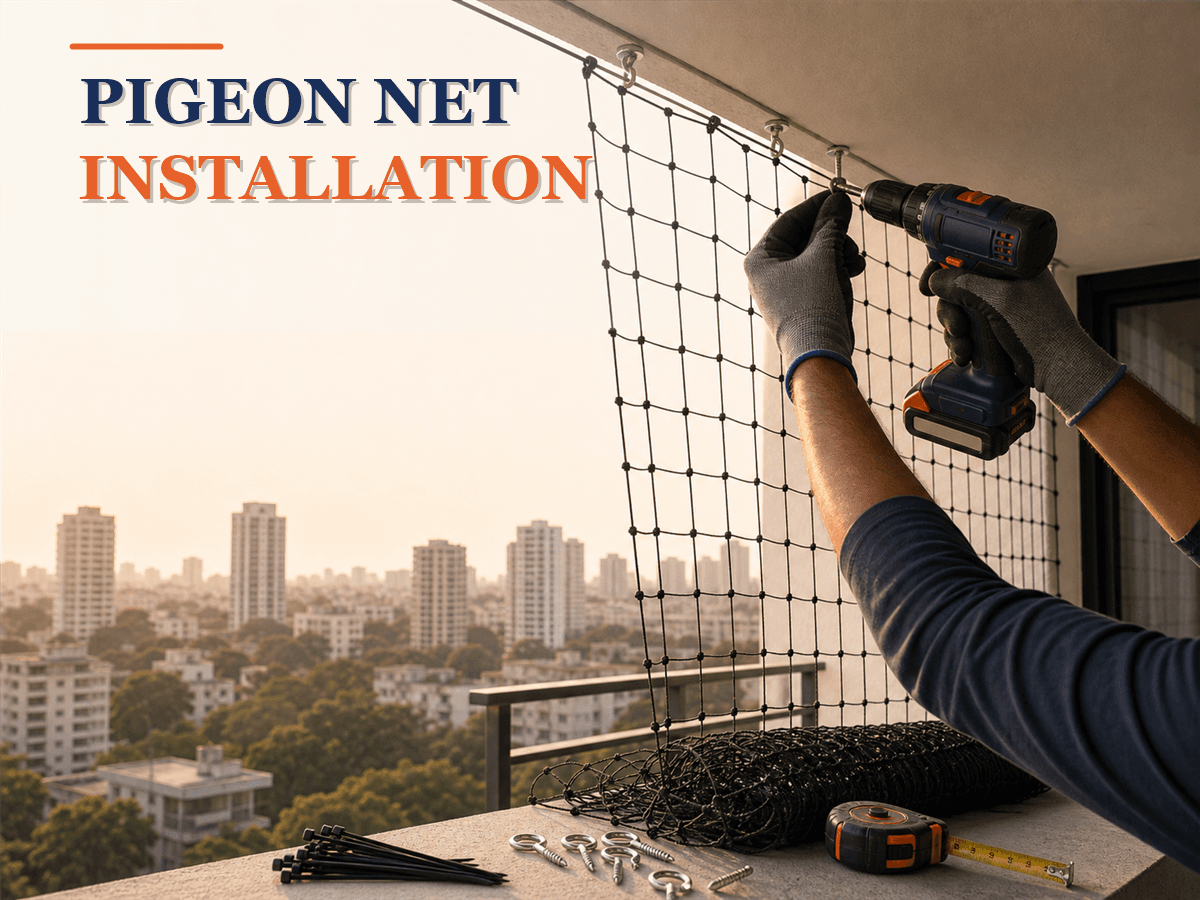
Step By Step Installation Guide of Pigeon Net
People living in cities such as Mumbai, Delhi, Bangalore, Jaipur, and other urban areas often face pigeon problems on balconies, windows, and terraces. Pigeons can leave droppings, build nests, create mess, and make the space difficult to use.
A pigeon net, also called a bird net or anti-bird net, helps block pigeons from entering the balcony while keeping the space clean and safe. A properly installed pigeon net gives better coverage and helps protect your home for a longer time.
Pigeon nets are usually made from strong materials that can handle outdoor weather. They are available in different mesh sizes, materials, and quality options. For pigeon control, commonly used options include HDPE and nylon nets in different mesh sizes depending on the requirement.
Buy pigeon nets here:
https://netskart.com/product-tag/pigeon-net
Tools Required for Pigeon Net Installation
Before starting the installation, keep all tools and materials ready.
Pigeon Net: Choose a good-quality pigeon net from a trusted seller. A stronger net gives better protection and lasts longer.
Fixing Material: Hooks, screws, or nails are needed to fix the net around the balcony area.
Border Rope: Border rope helps secure the edges of the net and keeps it tight.
Cable Ties or Nylon Cord: These are used to tie the pigeon net to hooks or screws.
Drill Machine: A drill is used to make holes in walls, ceilings, or balcony frames for fixing hooks.
Measuring Tape: This helps measure the balcony accurately before cutting or ordering the net.
Scissors or Cutter: These are used to trim extra net or rope.
Safety Gear: Gloves and safety glasses help protect your hands and eyes during installation.
Step 1: Take Dimensions for the Balcony
The first step is to measure your balcony properly. Accurate measurement helps you order or cut the right size of pigeon net.
Measure the Length, Width, and Height: Use a measuring tape to measure the full area where the net will be installed. Include corners, open sides, railing gaps, ceiling areas, and edges.
Check the Required Net Size: Once you have the measurements, make sure the net is large enough to cover the full area.
Handle a Larger Net Carefully: If the pigeon net is bigger than the balcony area, trim it neatly with scissors or a cutter after checking the required size.
Choose Custom Size if Needed: If your balcony has an unusual size or shape, a custom-size pigeon net can reduce wastage and give better fitting.
Netskart offers bird net and pigeon net options suitable for balcony use, with different sizes and material choices.
Explore bird nets here:
https://netskart.com/product-category/bird-net
Step 2: Mark the Fixing Points
After measuring the balcony, mark the points where hooks or screws will be fixed.
Mark the Spots: Use a pencil or marker to mark the fixing points around the balcony edges.
Maintain Proper Spacing: Keep hooks or screws at equal distance. Around 1 to 1.5 feet spacing is commonly used for better grip and support.
Double-Check the Marking: Before drilling, check that the points are evenly marked and placed in the right areas.
Prepare to Drill: Once all points are marked, you can start drilling holes for hooks or screws.
Proper spacing helps keep the pigeon net tight and reduces sagging.
Step 3: Drill Holes and Install Hooks
Drilling and hook installation are important because they hold the pigeon net in place.
Drill the Holes: Use a drill machine to make holes at the marked points. Make sure the holes are straight and deep enough for the hooks or screws.
Insert the Hooks: Place hooks, screws, or nails into the drilled holes.
Tighten Properly: Use a screwdriver or hammer as required to fix them strongly.
Check the Hooks: Pull gently to make sure each hook is fixed properly and does not move.
Use Strong Hooks: Good-quality hooks are important, especially for balconies exposed to wind.
Step 4: Attach the Net
Once the hooks are fixed, start attaching the pigeon net.
Start from One Corner: Begin from one corner of the balcony and fix the net there first.
Use Cable Ties or Nylon Cord: Tie the net to the hooks using cable ties or nylon cord.
Keep the Net Tight: As you move across the balcony, keep the net evenly stretched. It should not sag or hang loosely.
Check Every Attachment Point: Make sure each hook and tie is secure.
Tighten Loose Areas: If any part looks loose, adjust it immediately with extra cable ties or nylon cord.
Secure the Corners: Corners usually need extra attention because birds can enter through small gaps.
A properly attached pigeon net gives better protection and keeps the balcony cleaner.
Step 5: Secure the Edges
Securing the edges is one of the most important parts of pigeon net installation.
Tie the Border Rope: Start from one corner and tie the border rope along the net edge.
Fix the Rope to Hooks: Attach the rope to hooks or screws around the balcony.
Double-Check Corners: Corners should be tied tightly because birds often try to enter from gaps.
Maintain Tension: Pull the rope tight enough to keep the net stable, but do not overstretch the net.
Trim Extra Rope: Cut extra rope after finishing the tying work for a neat look.
Border rope gives extra strength and keeps the anti-bird net stable.
Step 6: Final Adjustments
After fixing the net, inspect the full installation carefully.
Tighten Slack Areas: If any part is loose, tighten the cable ties, nylon cord, or rope.
Check All Edges: Make sure hooks, screws, ties, and rope are fixed properly.
Look for Gaps: Check corners, railing areas, wall edges, and ceiling joints for small openings.
Ensure Even Stretching: The net should look neat and evenly stretched across the balcony.
Final checking helps make sure pigeons cannot enter through loose or uncovered areas.
Why Choose Netskart for Pigeon Nets?
Netskart offers pigeon nets and bird nets for balconies, windows, terraces, and other spaces. Customers can choose from Garware and ProNet bird net options depending on budget, material, mesh size, and durability needs.
Useful links:
Conclusion
Installing a pigeon net is one of the best ways to keep your balcony clean, safe, and protected from pigeons. Start by gathering the right tools, measuring your balcony accurately, marking fixing points, installing hooks, attaching the net, securing the edges, and making final adjustments.
A well-installed pigeon net helps reduce droppings, nesting, cleaning effort, and balcony maintenance problems. With the right net and proper installation, your balcony can stay cleaner, safer, and more comfortable throughout the year.