 Whatsapp an Expert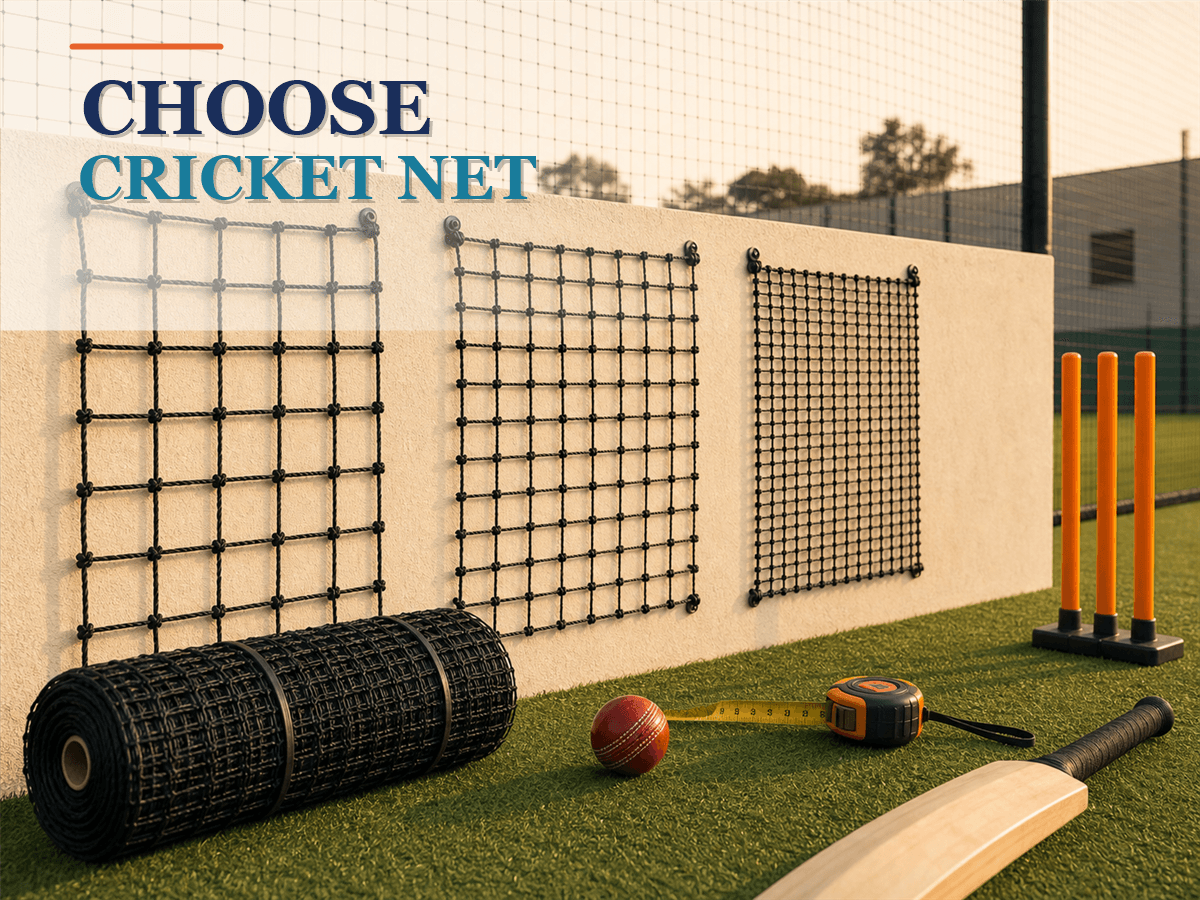
Steps To Choose The Right Cricket Net
There are many cricket nets available in the market. Some are very strong for regular practice, while others are lighter and easier to move. If you love playing cricket and want to improve your game, choosing the right cricket net is very important.
A cricket net gives you a safe practice area where you can work on batting and bowling without needing a full cricket ground. It also helps stop the ball from going too far, making practice more convenient and controlled.
Whether you want a cricket net for home practice, school, academy, club, or professional training, understanding the material, thickness, mesh size, knot type, brand, and dealer support will help you make the right choice.
Explore cricket nets here:
https://netskart.com/product-category/sports-net
Material
When choosing the right material for a cricket net, one of the most commonly used materials is HDPE, also known as High-Density Polyethylene.
Virgin HDPE
Virgin HDPE is a strong and durable material for cricket nets. It is suitable for outdoor practice areas because it can handle sunlight, weather changes, and regular ball impact.
HDPE is also a practical option because it does not allow mould to grow easily and performs well in different outdoor conditions. This makes HDPE cricket nets useful for schools, academies, clubs, grounds, and home practice areas.
Usage in Cricket
For outdoor training areas, academies, clubs, and grounds where the net will be used regularly, HDPE nets are often a strong choice because they are durable and suitable for sunlight exposure.
For indoor or shaded practice areas, lighter net options may also be used depending on the requirement. The right material should be selected according to where the net will be installed, how often it will be used, and how much weather exposure it will face.
Thickness
The thickness of a cricket net matters because it affects strength, durability, and usage. Cricket nets are available in different thickness options such as 1.5mm, 2mm, 2.5mm, and 3mm.
Different Thicknesses
1.5mm nets are lighter and can be suitable for lighter or casual practice.
2mm and 2.5mm nets are commonly used for regular cricket practice.
3mm nets are stronger and suitable where more durability is required.
Thicker nets can handle more regular ball impact, while lighter nets are easier to move and manage.
Why Choose Different Thicknesses?
If you are setting up a cricket net at home or school for light to moderate practice, a lighter or medium-thickness net may be enough.
For academies, clubs, and professional practice areas where the net will be used frequently, thicker options such as 2.5mm or 3mm can be better.
Useful cricket net options:
Mesh Size
For cricket nets used in practice and training, the commonly used mesh size is 50mm. This mesh size works well for cricket because it is small enough to stop cricket balls and still allows visibility through the net.
45mm mesh size is also available depending on the requirement.
Benefits of Standard Mesh Size
A 50mm mesh size is suitable for both batting and bowling practice. It allows players, coaches, and teammates to see through the net while keeping the ball inside the practice area.
Why 50mm Mesh Size?
A 50mm mesh size is commonly used because it stops the cricket ball effectively and helps absorb ball impact. This reduces interruptions and makes practice safer and more convenient.
Durability and Safety
A good-quality cricket net with proper mesh size and strong material gives better safety and longer life. Nets made from HDPE can handle regular ball impact and outdoor conditions when maintained properly.
For schools, clubs, academies, and sports centres, choosing the right mesh size helps create a safer and more effective practice setup.
Knot Condition
Cricket nets are available in different constructions, including twisted, braided, and knotless options. Each type has its own use and benefit.
Knotted or Twisted Nets
Twisted or knotted-style nets are made to handle ball impact and are commonly used in cricket practice areas. These can be suitable for regular training, depending on thickness and material.
Braided Nets
Braided cricket nets are strong and suitable for regular use. Netskart offers braided options in common thicknesses such as 2mm and 2.5mm.
Knotless Nets
Knotless cricket nets have a smoother finish and are usually easier to handle. The 3mm option is available in knotless type and can be suitable where a stronger, smoother net is required.
Which to Choose?
If you need a strong net for regular practice, braided or thicker options can be suitable.
If you want a smoother and strong option, knotless cricket nets can be considered.
If you need lighter practice use, twisted options may be enough depending on the setup.
Brands
Garware and ProNet are well-known brands for cricket nets. Both are trusted options and are used for different practice requirements.
ProNet
ProNet cricket nets are known for reliable performance and are suitable for different practice setups. ProNet options are also available with warranty on selected cricket nets, subject to terms and conditions.
Garware
Garware cricket nets are known for quality and durability. They are suitable for customers who want trusted netting options for outdoor and regular practice use.
Both Garware and ProNet cricket nets are available through Netskart, so customers can choose according to their budget, usage, and durability requirement.
Good and Experienced Dealer
Choosing a good dealer is important when buying a cricket net. An experienced dealer can help you understand the right material, thickness, mesh size, and size requirement for your practice area.
A good supplier should offer different cricket net options and guide you according to whether you need the net for home, school, academy, club, or ground use.
Netskart is a one-stop destination for different netting needs, including cricket nets, bird nets, safety nets, and other netting products.
Conclusion
Choosing the right cricket net is important for safe and effective cricket practice. The best cricket net depends on where it will be used, how often it will be used, what material is required, which thickness is suitable, and what mesh size is needed.
HDPE cricket nets are a strong choice for outdoor practice. 50mm mesh size is commonly used for cricket nets, while 45mm is also available depending on requirement. Thickness options such as 1.5mm, 2mm, 2.5mm, and 3mm can be selected according to practice intensity.
Garware and ProNet are trusted cricket net brands available at Netskart. Whether you need a cricket net for home, school, academy, club, or professional training, choosing the right net from a reliable seller will help you create a safer and better practice setup.